Marketplace Product Management Through Risk and Empathy with Nick Sinai | Episode #1
Nick Sinai explains how marketplace product managers connect seller outcomes, risk-first planning, machine learning, and stakeholder empathy.
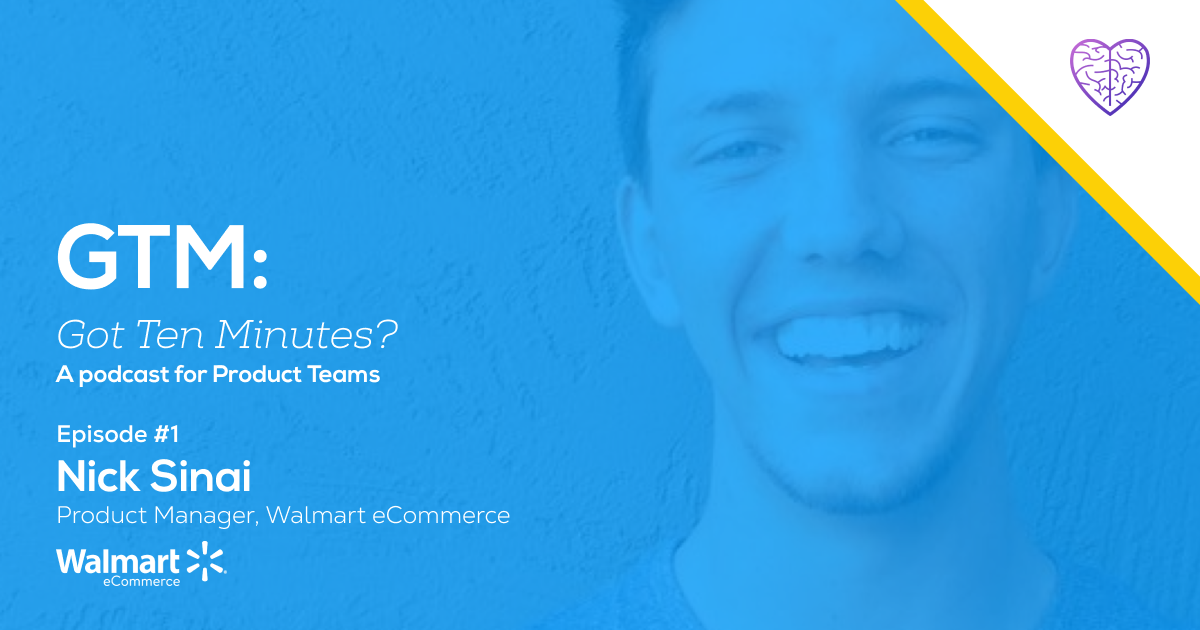
Nick Sinai arrived in product management through entrepreneurship rather than a straight corporate path. Growing up around entrepreneurial family members, he wanted to start a company early. In college, he and friends entered a university startup accelerator and tried to solve the stressful process of finding off-campus housing. Their software connected tenants and landlords, giving students more automation while helping landlords find tenants with less risk. The attempt taught him how difficult it is to build something users love, scale it, and make money at the same time. It also gave him a name for the work he wanted to learn more formally: product management.
After internships, Sinai joined Jet.com, which was acquired by Walmart. In this conversation, he explains what product work looks like when a PM owns more than a feature and has to connect technical delivery, product marketing, and business performance.
What you'll learn
How an entrepreneurial project helped Sinai discover product management
Why marketplace PMs must understand both sellers and shoppers
How to prioritize product risks before a larger rollout
Why stakeholder empathy can turn urgency into a more effective strength
Build for both sides of the marketplace
On Walmart Marketplace's seller programs and services team, Sinai works across the full lifecycle of tools and services for third-party sellers. His scope starts with identifying something that can help sellers grow and can extend to creating a business unit with its own profit-and-loss responsibility, considering a paid service, and handling product marketing. That breadth makes the job harder, but it also gives him an end-to-end view of the experience.
The marketplace context creates two customer groups that cannot be treated separately. Third-party sellers need tools that support their businesses, while people shopping on Walmart.com need a dependable buying experience. A useful PM lesson is to map how value moves between both sides. A seller-facing improvement matters partly because of what it enables for the shopper, and a shopper promise only works if sellers can deliver it sustainably.
Sinai gives a concrete example from a pilot product. Some sellers were already meeting a two-day delivery promise but had not enrolled those items in Walmart's two-day program. The product used machine learning to identify that opportunity automatically. This helped sellers receive recognition for a delivery experience they were already providing and could lead to additional revenue. During the disruption of COVID, one pilot seller told Sinai that the product helped keep revenue steady. For him, that direct connection between a product and a person's business is the most fulfilling part of the role.
Start planning with what could be wrong
Sinai uses familiar PM tools, including Notion, Jira, Confluence, and Zoom, but he places more value on the thinking frameworks behind them. He starts with a vision, breaks it into key results, and then asks what could invalidate the plan.
His risk framing goes beyond listing execution problems. He asks what would happen if the idea, experiment, iteration, or assumption had been wrong from the beginning. He then considers the worst plausible outcomes and orders the risks that need mitigation. For the machine-learning pilot, this approach supported confidence that a model tested with a smaller group could continue delivering useful results when expanded to 100 sellers.
This is a practical alternative to treating risk review as a final launch checklist. Teams can identify the assumptions carrying the most weight, decide what evidence would challenge them, and test those assumptions before increasing exposure. The goal is not to eliminate uncertainty. It is to make the next rollout proportionate to what the team has actually learned.
Pair urgency with stakeholder empathy
The most demanding part of Sinai's broad role is stakeholder management. He has to keep explaining how the product supports different organizations, each with its own priorities and commitments. He describes that work as both transactional and emotional because alignment requires sustained communication and empathy.
Sinai once saw his desire to move quickly and his tenacity as a weakness. Pushing for speed without understanding other teams' commitments made it harder for them to prioritize his work. He has since redirected that energy toward identifying stakeholders' blockers and, where possible, helping remove them. The lesson is not simply to be patient. It is to make urgency useful by understanding what another team needs in order to act.
Listen to the full conversation: Episode #1 audio.
For PMs working across business, data, marketing, and engineering, Sinai's experience offers a clear operating model: understand every side of the system, test the assumptions that could break it, and help stakeholders overcome the constraints behind their priorities.
Continue with the workflow pages
Use the ideas from this episode inside the selector, Playwright, and bug-reproduction pages that connect content to product intent.
 Install the Chrome Extension