Episode #61: Designing Through Change with Max Blum
Max Blum explains product migration, developer collaboration, staged change, cross-functional learning, and leadership grounded in team needs.

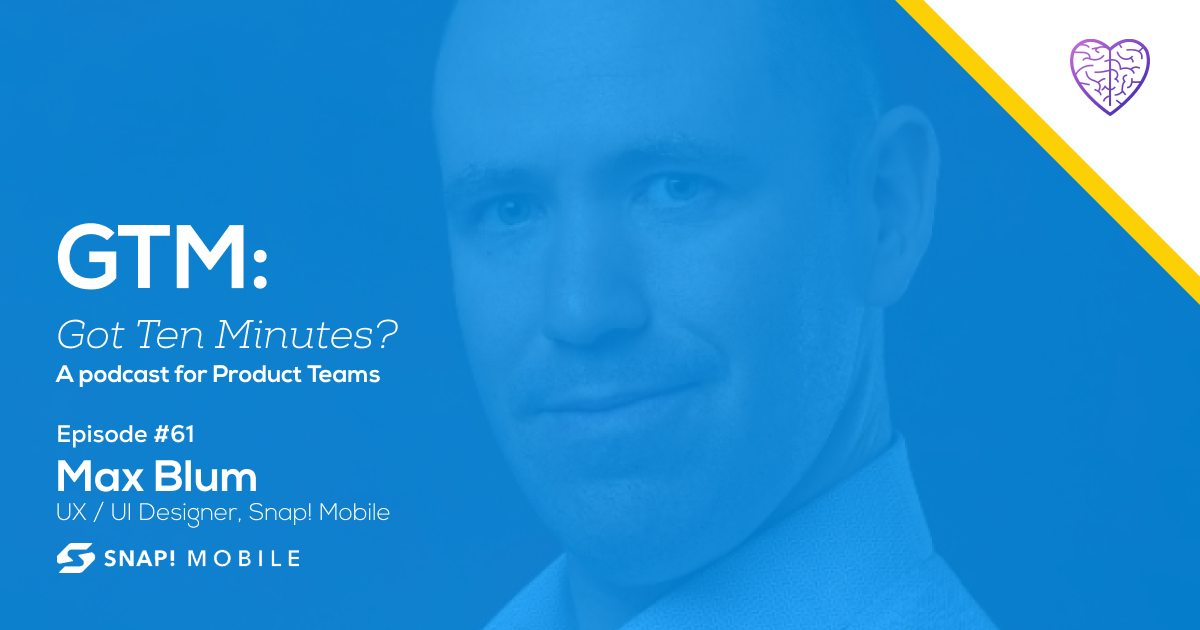
Max Blum spent four years as a massage therapist focused on orthopedic and sports work. The appeal was direct improvement: someone could arrive with a headache, receive care, and leave feeling better. He later recognized that his deeper interest was not limited to bodywork. He liked taking something that existed and making it better.
His earlier creative experience included art, graphic design, film school, and freelance production work. In January 2020, Max obtained a license for his massage business. COVID soon made close work in a small room impractical, while film production also shut down in the Bay Area. He searched for work that could be done remotely, took a personality assessment that suggested UX design, researched a field he had never heard of, and enrolled in a bootcamp. At Snap! Mobile, that varied background became useful in a complex platform transition.
What you'll learn
How film critique and production experience transfer into product design
Why a designer can learn code without trying to become an engineer
How to migrate acquired products without overwhelming existing users
Why questions and grace lead to better developer collaboration
How leadership improves when it responds to a project's needs rather than personal status
Translate across disciplines
Film school taught Max how to give and receive effective critiques. It also taught him to observe what people on a team do well and how specialized roles fit into a larger production. A film set can be highly hierarchical, but every department benefits when people anticipate what the next person will need. Max carries that systems view into product work.
During his UX bootcamp, he joined a community called UX Wizards. The group wanted to turn a design system that existed as an Adobe XD style guide into an accessible website. Max volunteered to write code from scratch. His goal was not mastery of programming. He wanted enough knowledge of CSS and implementation logic to communicate with developers in terms closer to their own mental model.
That preparation mattered at Snap! Mobile. The company had acquired six siloed products, some written in different languages, and needed to bring their capabilities into one cohesive platform for athletic directors, school districts, coaches, and other group leaders. The work involved more than applying a new visual layer. Underlying systems had to communicate with one another and with the broader platform.
When an implementation differed from his Figma design, Max learned not to begin with blame. He assumed the developer was capable and had made a choice for a reason, then asked about the limitation or decision behind it. Sometimes the design needed to change. At other times, the team clarified which part of the flow had to remain. Starting with curiosity kept people out of a defensive posture and made compromise possible.
He applies the same learning stance across product management, marketing, training, customer-facing teams, and business strategy. Knowing a little about another discipline creates empathy and better questions. It does not make the designer that discipline's expert. Max wants colleagues to explain their constraints and use their expertise rather than have him prescribe their work.
Sequence change instead of chasing perfection
The acquired products created a difficult change-management problem. The team's first chapter was to preserve functionality while translating the legacy interfaces into Snap's design language. Existing square buttons might become rounded Snap components, while staying in the same place and performing the same task. For current users, even that visual shift could be substantial. Reworking the full experience at the same moment could disrupt the mental models they already relied on.
Max's perfectionist instinct wanted to improve the flows immediately. Enterprise work required him to accept sequence. The first release could unify the visual system and create a technical foundation. Later chapters could integrate products, test behavior, conduct discovery, and redesign workflows with better evidence. A step that is intentionally incomplete can still be correct when it enables safer progress.
Weekly meetings between design and developers helped replace a rigid handoff with an iterative loop. Developers collected questions during the week, discussed them directly with Max, and shaped decisions before a final review. He describes this breakdown of departmental silos as one of the initiatives he was proudest to support.
Max also discusses learning when to lead. On one project, a de facto leader needed to step away. He asked permission to take formal responsibility, quickly delegated work according to people's strengths, and the group delivered 24 days ahead of its original April deadline. The lesson was not that he should take over every room. It was that anxiety about visibility should not stop him from supplying needed structure. Sometimes the project needs him to lead; sometimes it needs him to execute, ask for help, or keep a meeting focused.
Listen to the conversation
Hear Max Blum discuss six-product migration, cross-functional communication, progressive change, mentorship, and situational leadership.
Continue with the workflow pages
Use the ideas from this episode inside the selector, Playwright, and bug-reproduction pages that connect content to product intent.
 Install the Chrome Extension