Episode #62: Building Responsible Technology with Afua Bruce
Afua Bruce explains people-centered technology, interdisciplinary ethics reviews, human oversight, and practical ways to reduce harm in AI systems.

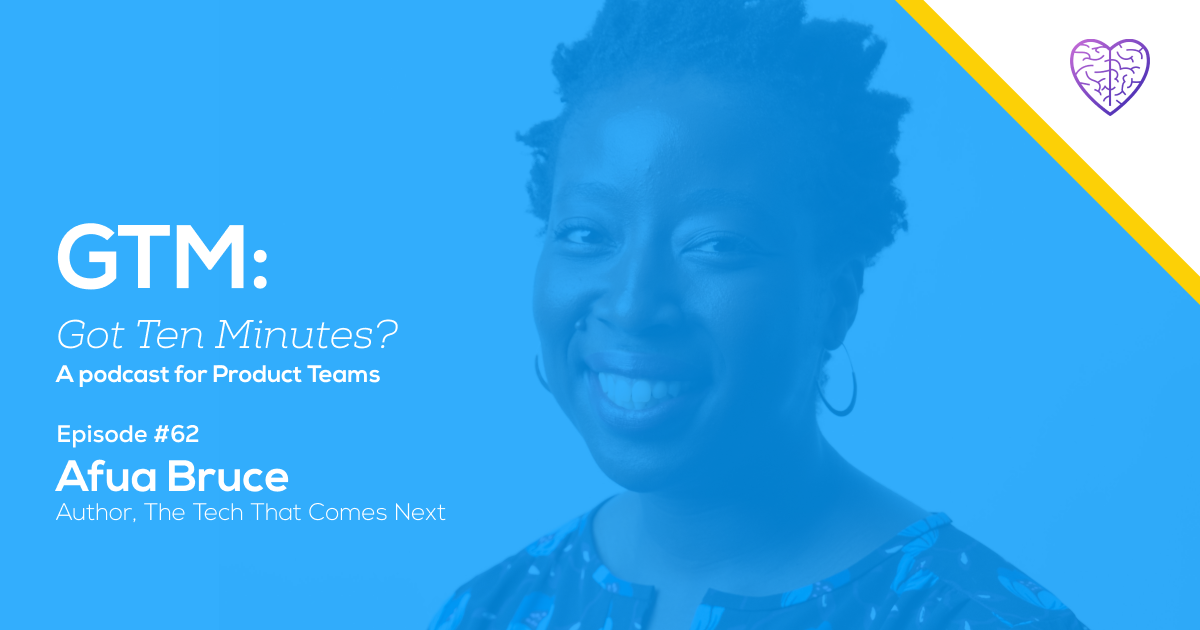
Afua Bruce's interest in technology began with remote-controlled cars, video games, and small computer programs. When choosing a college major, she considered both computer engineering and English. As the child of Ghanaian immigrants, she chose engineering first and discovered that she genuinely enjoyed programming, debugging, and designing software.
Her career later included software engineering at IBM, engineering and management work at the FBI, federal interagency coordination through the White House National Science and Technology Council, leadership of public interest technology at New America, and service as Chief Program Officer at DataKind. She founded ANB Advisory Group to support responsible technology development and co-authored The Tech That Comes Next with Amy Sample Ward. Their book asks what technology could look like if organizations centered equity, community knowledge, and measurable human outcomes.
What you'll learn
Why values appear in code even when a team never states them explicitly
How five different roles can influence responsible technology development
Where interdisciplinary reviews belong inside a product process
Why known patterns of harm should not be dismissed as unintended surprises
When AI systems need human oversight, an off switch, or a different solution entirely
Put values and communities into the process
Afua and Amy wanted to move beyond cataloging technology's failures. Those failures are real: systems can overlook categories of people, data may not be separated in ways that reveal gender differences, and benefits systems can disproportionately block legally entitled access for people of color. The authors also saw organizations already building technology with communities and wanted to show what teams could build toward.
The book begins with values because, as Afua explains, what an organization values becomes what it builds. Decisions about profit, impact, and which communities receive priority appear in code whether or not the team discusses them openly. The values in the book include respecting lived experience alongside formal education, giving people room to learn and apply new skills, and treating accessibility as more than technical web compliance.
Broad accessibility changes how work is organized. A focus group must happen at a time, place, and in a format that allows the intended participants to contribute. Teams should remove jargon so community members can understand the discussion and provide useful information. Product design, testing, and development should begin with what a community wants to accomplish rather than requiring people to adapt to a predetermined technical answer.
The second part of the book addresses five roles: social impact organization leader, technologist, funder or investor, policymaker, and community member. Each controls different levers. Funders can support more inclusive development. Technologists can plan for long-term impact and sustainability. Social impact leaders can make sure staff members are equipped to choose and use technology. Community members can contribute knowledge that formal credentials do not replace.
Afua recommends involving these perspectives throughout development, not only at kickoff or final testing. She describes advising a technology company that added an impact and ethics check to its product process. A few months into development, while the work was still early, the company brought together potential customers, community members, historians, and ethicists. That interdisciplinary group identified ethical and societal risks that product managers and engineers had not removed on their own.
Measure human outcomes, not technical novelty
Responsible AI begins with a real use case: who will use the product, what problem will it solve, and how will people engage with it? Afua advises teams that see only upside to keep looking until they find possible harm. Familiar patterns deserve deliberate review, including disproportionate harm to Black and brown people, failure to account for women, and inequitable allocation of resources.
Her example from John Jay College shows a different measure of success. The college examined why some students completed three quarters of their required credits but did not graduate. With about 20 years of institutional data, data scientists ran multiple models to identify students at risk and possible interventions. College staff retained final responsibility for deciding who to contact and what support to offer. Humans remained in the loop for a sensitive decision. After two years, the program was associated with more than 900 additional graduates at a reported cost of about $240. The outcome was not merely a model. It was people completing college.
Human oversight is also important with generative AI because outputs can contain hallucinations or inaccurate information. Organizations should decide when a person reviews a result, who can turn a system off, and what happens if one customer group begins to experience disproportionate harm. Privacy, security, and access should be reflected in internal policy and code even while external regulation changes.
More AI is not automatically better. If an existing feature produces a large improvement and an elaborate new system adds only a marginal gain, the additional complexity may not serve customers. The better answer could be improved service, another supporting product, or a stronger community. Technical sophistication includes recognizing when AI is not the right tool.
Listen to the conversation
Hear Afua Bruce discuss The Tech That Comes Next, community participation, ethical product checks, human oversight, and outcome-centered AI.
Continue with the workflow pages
Use the ideas from this episode inside the selector, Playwright, and bug-reproduction pages that connect content to product intent.
 Install the Chrome Extension