Episode #75: Maintaining Strategic Alignment with Šejla Vatres
Šejla Vatres explains how humility, continuous discovery, stakeholder empathy, and incremental delivery keep digital transformation aligned with strategy.

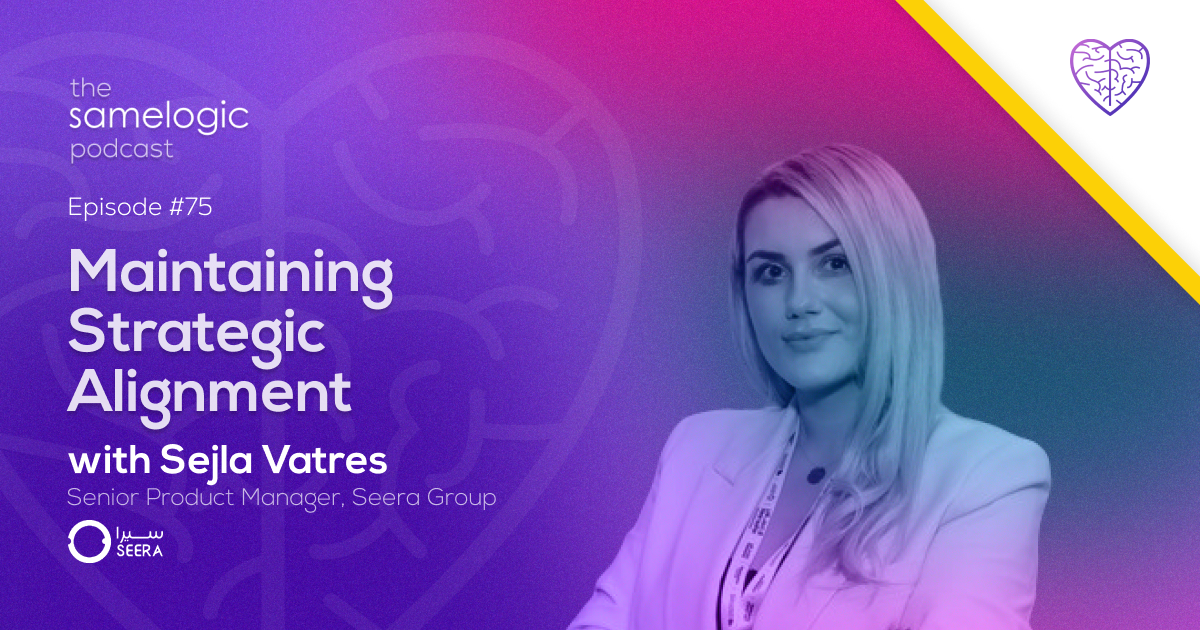
Šejla Vatres entered product management before it was a common university subject or a widely taught career path. She was working in marketing at a small startup founded by a CTO and a CEO with a design background. Because both founders also ran other businesses, Šejla increasingly found herself working directly with designers and engineers. She enjoyed that collaboration, kept taking on more of it, and eventually realized that product was the work she wanted to pursue.
That route gave her a business and marketing foundation rather than a deeply technical one. She worked hard to develop enough technical understanding for productive conversations, but found that business acumen often created more value in the companies where she worked. Her experience challenges a simple technical versus nontechnical distinction. A product manager can contribute by understanding the business, learning the technology well enough to collaborate, and knowing which form of expertise matters in a particular setting.
What you'll learn
Why being willing to be wrong is an operating skill for product managers
How stakeholder readiness should shape a digital transformation plan
How small delivery steps can remain connected to long-term objectives
Why continuous discovery can work across B2B and B2C products
How team culture creates the conditions for useful customer discovery
Treat humility as part of decision-making
One of Šejla's earliest and most durable lessons is the importance of humility. Product managers constantly make decisions, participate in debates, and help teams choose among competing directions. Some of those decisions will be wrong. For Šejla, humility means serving customers and supporting the team, but it also means accepting that she will not always have the right answer. The practical response is to acknowledge the miss, let it go, and move forward rather than defend a decision after the evidence has changed.
She pairs humility with curiosity, resourcefulness, and close attention to data. Those habits help a product manager learn quickly instead of treating an initial opinion as a fixed position. They also support stronger stakeholder conversations because a recommendation can be connected to customer evidence, business context, and technical constraints rather than personal authority.
Match transformation to the people experiencing it
At Seera Group, Šejla manages digital transformation across two travel and tourism brands, including leisure and religious tourism. The work involves moving technology and processes into the wider group ecosystem. It also involves legacy systems, acquired businesses, and employees who may have worked with the same processes for 15 or 20 years. Resistance is therefore not merely an objection to a feature. It can reflect the scale and pace of change being asked of people.
Šejla argues that digital transformation must account for both online and offline channels. A software-oriented product manager may prefer to move everything online, but that choice can ignore stakeholder needs and the organization's capacity to adapt. She instead considers what stakeholders need, how quickly they can change, and which parts of the experience should remain offline while the transition develops. This makes adaptation part of the strategy rather than evidence that the strategy has failed.
Keep each small step tied to the larger goal
Šejla frequently uses the ideas behind continuous discovery habits because she has found them useful across industries and across B2B and B2C products. Discovery begins with a constructive team culture, then continues through customer conversations and quantitative and qualitative data. Her day-to-day stack reflects that combination: collaborative planning and workshop tools, delivery tools, and analytics all support different parts of the work.
In a strategic transformation role, she has to hold the big picture while remaining pragmatic. Strategic objectives do not arrive overnight, so the immediate question is whether each smaller step still points toward them. That means preserving a clear destination without pretending the route cannot change.
Listen to the full conversation with Šejla Vatres for her account of entering product, working with resistant stakeholders, and balancing strategy with adaptation: Listen to Episode #75.
Continue with the workflow pages
Use the ideas from this episode inside the selector, Playwright, and bug-reproduction pages that connect content to product intent.
 Install the Chrome Extension