Episode #78: Building Online Communities with Kaylee Slusser
Kaylee Slusser explains how power-user journeys, focused activation, privacy planning, and user research can strengthen healthy online communities.

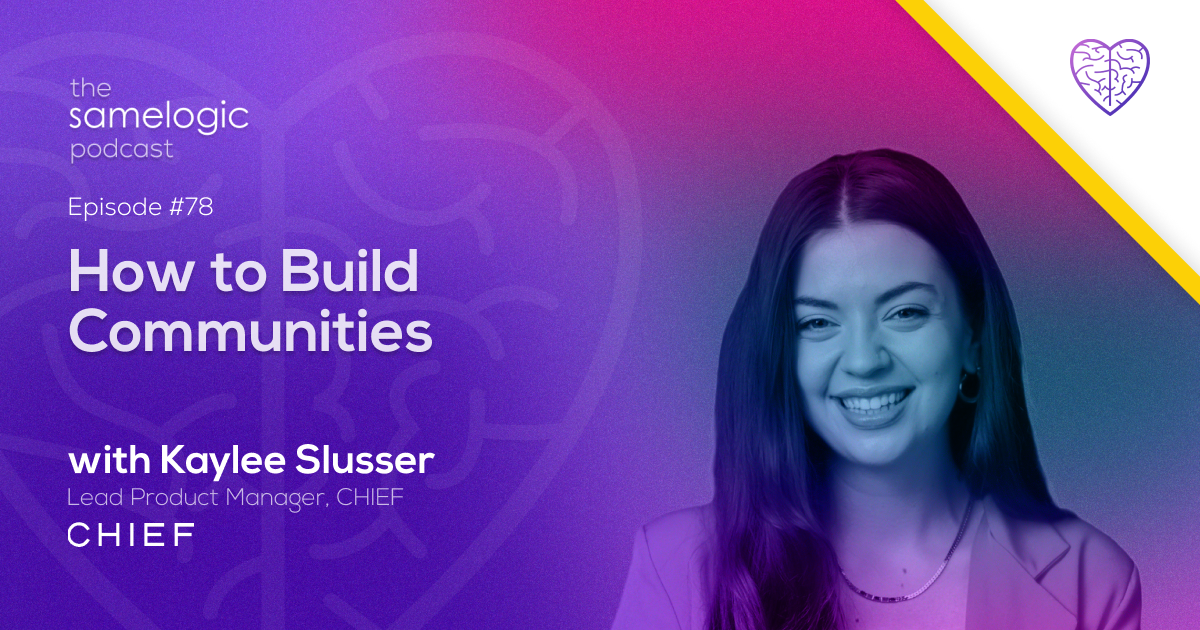
Kaylee Slusser entered product management through a route that was unusual in her small hometown, where technology careers were not a familiar possibility. At the University of Pennsylvania, she began hearing more about the industry through companies such as Google and Facebook. A college mentor's Facebook internship showed her that a young person could work on products with meaningful reach. Kaylee later completed two internships at Facebook, now Meta, and returned after college to work in product management.
She joined the company's community services incubator, where a small team developed zero-to-one products inside a much larger organization. That setting gave her the resources of established research and data science teams while preserving some of the speed and ambiguity of a startup. Her work included Facebook Dating and Facebook Campus, followed later by community and activation work at Chief. Across those products, she learned that a community does not become healthy simply because people can join it. Teams must understand what valuable participation looks like, reduce the effort required to reach it, and address safety from the start.
What you'll learn
How to identify useful patterns in the journeys of power users
Why activation should focus on the first days and months of membership
How channel choice changes between different communities
Why privacy and safety belong in every community product's risk planning
What changes when a product manager moves from big tech to a startup
Map the behavior that makes participation valuable
Kaylee starts community analysis with the small group of people who use a product most successfully. A new product will usually attract a few power users, a larger group of casual participants, and many people who try it once before leaving. Power users may have stronger motivation or enough persistence to overcome product friction. Their behavior therefore reveals both the path to value and the obstacles that less committed users may not tolerate.
Her approach is to map what power users do in their first 30, 60, and 90 days. As an illustrative example, she describes a Discord member who joins several servers, messages regularly, and then adds friends. A team could investigate whether that sequence is associated with healthier participation, then make those actions easier for other users. The goal is not to force everyone into an identical routine. It is to identify behaviors that appear to support contribution and connection, then remove avoidable breakage from the journey.
Facebook Campus also required direct learning from its intended community. The initial launch covered a limited number of campuses and required an education email address. The team worked with schools, but also created Facebook groups where students could give feedback directly. Researchers helped the team understand student needs, while data scientists examined how that demographic already used Facebook. Those inputs supported ruthless prioritization around what could make the first release useful within the timing constraints of the school calendar.
Design activation for the member and the channel
The beginning of a membership is a particularly important activation window. New members have completed signup and may have paid, so their interest is high. Kaylee uses evidence from successful members to decide which actions newcomers should be encouraged to try during their first days or months. Notifications can guide those actions, but the delivery channel must fit the audience rather than the product team's default habits.
At Chief, whose community includes executives with demanding schedules, email is a practical channel because members already spend substantial time in their inboxes. A Facebook audience may respond better to push or in-app notifications. In either case, the message should help the member reach a useful experience instead of promoting every available feature. For busy members, the central design question is how to make the network valuable within the limited time they can give it.
Activation cannot be separated from trust. Kaylee argues that every community product requirements document should address privacy and safety in its risk section. The controls depend on the product. Chief uses a vetted membership process, while an open platform has a different entry model and risk profile. Dating products add further sensitivity, and Facebook Dating's European launch required research into GDPR, compliance work, and preparation for a fixed launch window. These examples show why a copied safety checklist is not enough. The team must evaluate access, audience, geography, and the kinds of interactions the product enables.
Kaylee also found startup work valuable because it widened the range of problems she could own. Instead of dismissing an issue as outside her role, she could ask whether users needed a solution and whether it made sense for the business. Although she once worried that a nontechnical background would weaken her product work, asking engineers simple questions became a strength. Those questions sometimes exposed a shorter process or a clearer reason for a technical choice.
Listen to the episode
Hear Kaylee's full discussion of Facebook Dating and Campus, activation at Chief, community safety, startup ownership, and the future of digital connection. Listen to Episode #78.
Continue with the workflow pages
Use the ideas from this episode inside the selector, Playwright, and bug-reproduction pages that connect content to product intent.
 Install the Chrome Extension