Adaptable Design Beyond Trends with Ruben Cespedes | Episode #88
Ruben Cespedes explains how designers can learn technical skills, choose a specialty, support remote teams, assess trends, and adapt to AI tools.

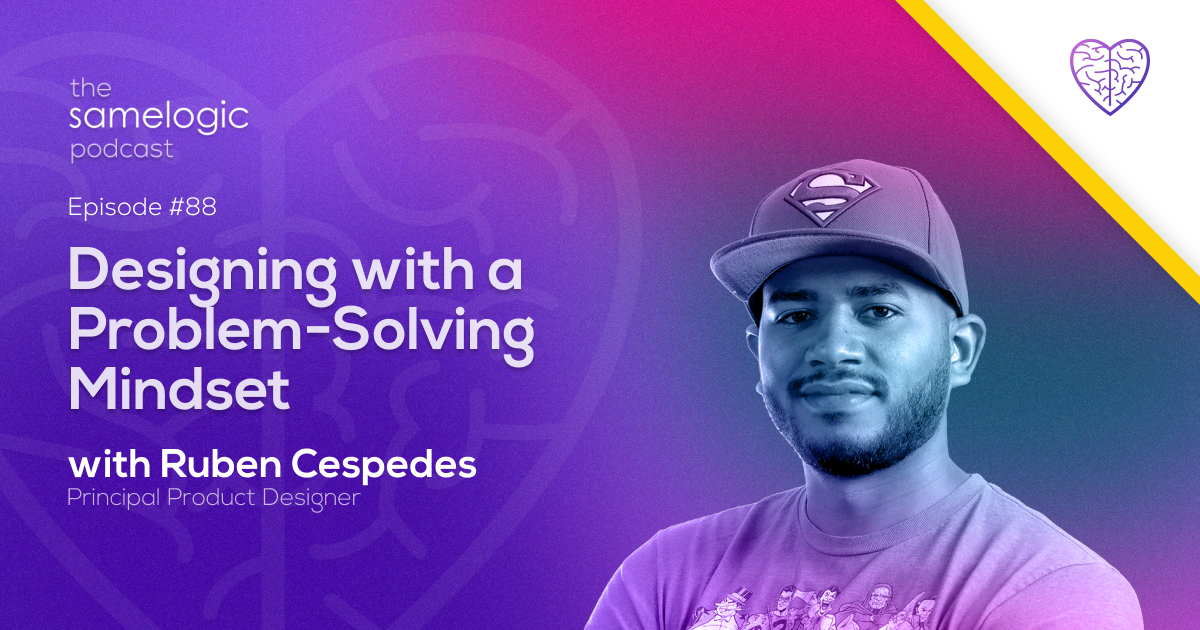
Ruben Cespedes began his career focused on graphic design and visual appeal. As digital work changed, he realized that making attractive graphics was not enough. He needed to understand how people would experience a design and how engineers would turn it into a working product. That realization led him from print and web design into UX and product design, while a growing interest in how things function pushed him to learn development basics.
His path offers a practical model for designers facing constant change. Cespedes does not claim that anyone can predict the next platform or build a permanently future-proof experience. Instead, he argues for adaptable skills, sound foundations, deliberate specialization, and a willingness to test unfamiliar tools without losing sight of the problem.
What you'll learn
Why basic coding knowledge can improve design and engineering collaboration
How to choose a design specialty without treating the first choice as permanent
What leaders and distributed teams can do to support learning and human connection
How to evaluate a visual trend against user needs and business goals
Why designers should explore AI tools rather than ignore emerging technology
Learn enough technology to collaborate better
Early in his career, Cespedes repeatedly encountered a disconnect between designers and developers. Designs created in Photoshop could include effects that were difficult or infeasible to implement with the web technology available at the time. To understand those constraints, he taught himself basics across HTML, CSS, JavaScript, and PHP. Books, manual experimentation, and repeated failures were his learning process because today's large library of online courses and videos did not yet exist.
Technical fluency helped him understand what engineers meant during handoffs and made him more empathetic about implementation limits. For designers today, his example suggests a focused approach: learn enough about the medium to ask better questions, recognize constraints, and discuss tradeoffs with the people building the experience.
The same adaptability applies to platforms. A straightforward site may not need a content management system, while another product may soon require calendars, integrations, or additional functionality. Cespedes recommends using discovery to ask what the project requires now and how the client expects it to develop. Responsive behavior, accessibility, information architecture, and strong contrast remain important foundations, but the selected tool should fit the problem and likely direction of the work.
Build a direction, then keep testing it
Cespedes did not know his eventual specialty when he left college. Around 2007, after working across editorial design, photo manipulation, print, and animation, he chose to move further into digital work. Web design then opened paths into UX and product design. He advises early-career designers to explore disciplines such as brand, web, animation, photography, and user experience, notice where their ability and interest meet, and build toward that area. If the direction proves wrong, they can change lanes.
Learning format should also fit the individual. Some people can teach themselves effectively, while others benefit from a teacher, bootcamp, or academic program. Before choosing a course, Cespedes recommends identifying which environment actually helps you learn. He also cautions against expecting to become employable in UX within a few months. Developing the craft takes patience, particularly when remote roles expose applicants to broad competition.
Mentors can make the process more directed. Cespedes found mentors through work, events, networking, and later online platforms. A creative director's instruction to experiment challenged him to move beyond one familiar design style, and he continued to apply that lesson years later. For leaders, creating similar growth means setting clear goals, offering constructive feedback, providing learning resources, and celebrating teammates' successful work rather than merely assigning tasks.
Judge tools and trends by the problem
Cespedes keeps track of design trends but does not treat popularity as proof. A bento-box layout may work for one company and obstruct another product's information architecture or call to action. His test is direct: does the approach support the user experience and the organization's goals? Designers can try a trend and study how it works, but they should reject it when it does not serve the product.
He takes a similarly practical view of AI. He points to tools that generate interface concepts from prompts and move the results into Figma, as well as emerging systems intended to assist engineers. His advice is to explore how these tools can make work faster and support complex tasks, not to assume they remove the need for designers. The durable skill is learning how to use new capabilities while continuing to solve a real user problem.
Distributed work adds a human requirement to that problem-solving mindset. Video calls and breakout rooms can support collaboration, but teams still need conversation that is not limited to status updates. Cespedes argues that deliberate human connection contributes to better culture, products, and design.
Continue with the workflow pages
Use the ideas from this episode inside the selector, Playwright, and bug-reproduction pages that connect content to product intent.
 Install the Chrome Extension