Deterministic Bug Reproduction for Browser Failures
Turn an intermittent browser bug into repeatable steps with a known start state, fixed environment, explicit inputs, stable evidence, and a bounded rerun.

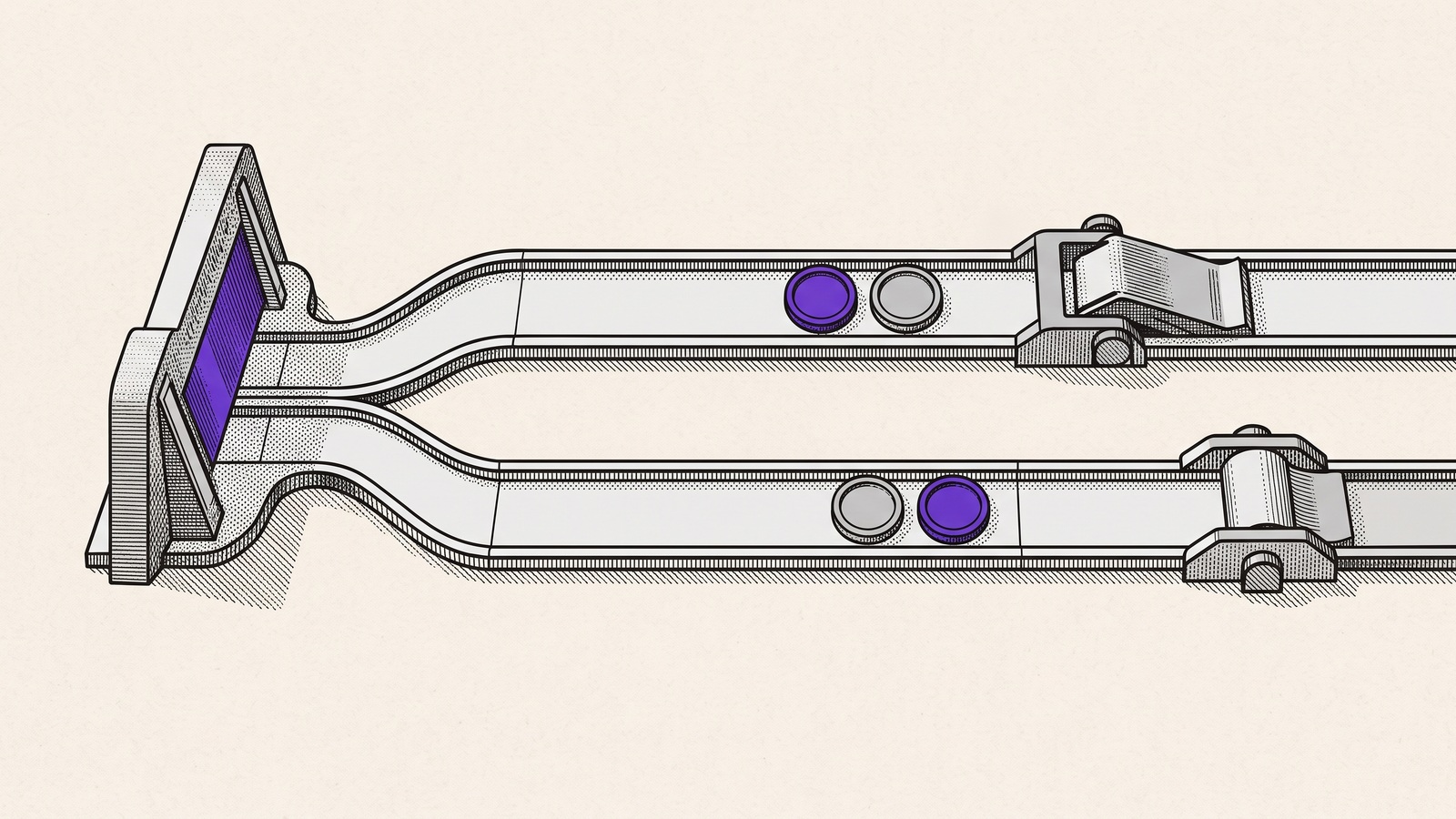
TL;DR: Deterministic bug reproduction means the same known start state, environment, inputs, and ordered browser actions produce the same observable failure often enough for another person to test the same claim. Write the report as a small experiment: freeze the preconditions, name the first mismatch, keep a passing control, attach stable evidence, and ask for one bounded rerun. This does not guarantee a universal replay, recover missing backend state, identify the root cause automatically, or produce a finished regression test.
A browser bug becomes expensive when the report describes the ending but not the path. Support sees an error. QA sees it once. Engineering opens a fresh page and cannot make it happen again.
The usual response is to add more screenshots or a longer paragraph. The better response is to make the reproduction deterministic.
A deterministic reproduction does not mean the software fails for every user in every environment. It means the report defines a controlled set of conditions under which the failure can be repeated and compared with a passing path.
What deterministic bug reproduction means
A useful reproduction contract has seven parts:
a known starting state;
a named environment;
explicit input values;
an exact order of browser transitions;
expected and actual behavior;
stable evidence from the first mismatch;
a bounded rerun procedure.
If one of those parts is unknown, label it unknown instead of quietly assuming a default.
That distinction matters because two browser sessions that look similar can differ in cookies, local storage, account role, feature flags, page history, open tabs, cached assets, service workers, locale, timezone, viewport, permissions, or server data.
Playwright uses isolated browser contexts to improve repeatability between tests. Its test isolation guidance is useful beyond automation because it shows why a clean start state must be explicit. A fresh context is a control. It is not automatically the same path the reporter followed.
Start with a reproduction contract
Write the conditions before writing the clicks.
Contract field | What to record | Why the engineer needs it |
|---|---|---|
Start state | Account, role, record state, page, open tabs, stored browser state | Defines the point from which the actions are meaningful |
Environment | Browser and version, operating system, viewport, locale, timezone, build | Separates product behavior from environment changes |
Inputs | Exact values, fixture IDs, option names, uploaded file type | Removes hidden variation from the scenario |
Ordered actions | Every meaningful transition in sequence | Preserves cause-and-effect candidates |
Expected result | The contract the user or test relied on | Gives the failure a falsifiable target |
Actual result | Visible state, response, retained state after reload | Shows what contradicted the expectation |
Evidence | Screenshot, trace, console line, request, response, recording | Lets the teammate inspect the first mismatch |
Rerun bound | Number of clean reruns and the single variable allowed to change | Prevents an endless investigation loop |
The contract should be short enough to execute. If it requires a page of prose before the first action, separate background context from the runnable steps.
A controlled browser example
We built a fake checkout with synthetic data. It creates no real order.
The checkout starts in Canada with standard shipping. The bug appears only when the tester selects Canadian express shipping and then changes the country to the United States. The interface visibly updates the shipping field to US Express, but a stale Canadian shipping code remains in the submitted state. The fake server rejects the order with HTTP 422.
The control path changes the country first and selects US Express second. That path succeeds.
Fixed environment
Chromium through Playwright
1280 by 720 viewport
en-USlocaleAmerica/New_Yorktimezonefresh browser context for every run
synthetic checkout data
Failing order
Open the fake checkout in Canada.
Select Express shipping.
Change the country to United States.
Confirm the visible shipping method says Express.
Place the fake order.
Observe
Rejected 422: express_ca does not match US.
Passing control
Open the same fake checkout in Canada.
Change the country to United States.
Select Express shipping.
Place the fake order.
Observe
Accepted: express_us.
We ran each path five times from a fresh context. The failing order produced the same 422 rejection in all five runs. The control order produced the accepted US shipping code in all five runs.
The result does not prove that every shipping bug has this cause. It proves that this synthetic failure depends on one ordered transition: selecting the shipping method before changing the country.
Record the first mismatch
The final 422 is not the first mismatch.
The first mismatch occurs when the visible field says express_us while the submitted state still contains express_ca. That is the point the fixing teammate needs to inspect.
For each step, compare three layers:
Layer | Question |
|---|---|
Visible interface | What did the person see after the action? |
Browser state | What value, element state, or event did the page retain? |
Durable result | What did the server or a fresh readback accept and preserve? |
A screenshot can show the visible US Express selection. A network record can show the stale Canadian code. The ordered steps explain how those two facts became inconsistent.
When using an automated trace, inspect the earliest action where the passing and failing paths diverge. The Playwright Trace Viewer can retain actions, DOM snapshots, network activity, console output, and source locations. A trace still needs a clear start state and expected result. More captured data does not automatically make the report deterministic.
Keep a passing control beside the failure
A passing control is not just proof that the system sometimes works. It removes alternative explanations.
In the checkout example, both paths use the same browser, viewport, locale, timezone, page, country, and final shipping choice. The only intentional difference is action order.
That comparison makes the next engineering question precise:
Why does changing country after selecting shipping preserve a stale submission value when changing country first does not?
Without the control, the team may investigate the endpoint, the US shipping rules, the browser, or the test runner. With the control, the report narrows attention to state reconciliation after the country transition.
Change one variable at a time
If the failure is not stable yet, build a small variable matrix.
Variable | Failing value | Control value |
|---|---|---|
Account role | Support admin | Standard member |
Starting page | Existing open checkout | Fresh checkout |
Action order | Shipping then country | Country then shipping |
Browser state | Existing storage | Fresh context |
Build | Current candidate | Last known good |
Run the smallest meaningful comparison. Do not change browser, account, data, and action order in the same attempt. A passing rerun after four variables changed gives relief, not diagnosis.
For intermittent problems, preserve the first failure before resetting anything. A fresh page can erase the exact state that made the bug useful.
Define a bounded rerun
A reproduction request should tell the engineer when to stop.
Use a rule such as:
The purpose is not to make every defect happen forever. The purpose is to distinguish a stable reproduction from a one-off observation and to expose which variable changes the result.
What stable evidence looks like
Stable evidence survives the reporter's browser session and helps another person inspect the same claim.
Useful evidence can include:
a concise start-state snapshot;
the ordered browser actions;
exact input values;
the first visible mismatch;
the relevant request and response;
a trace or deliberately started recording;
a fresh-page or clean-context control;
the final readback after reload;
the rerun count and result.
Avoid attaching every log by default. Select the evidence that explains the transition. The teammate fixing the bug should not have to reconstruct the story from a folder of unrelated files.
Practitioners describe the same failure pattern in discussions about bug reports developers cannot reproduce. The useful lesson is not that reporters need more ceremony. It is that the report must preserve the conditions and the path another person needs to test.
Where deliberate browser recording helps
When browser history or action order matters, start recording before the state-changing step. Samelogic is a platform for deliberately recording browser bug steps, playing the path back, inspecting the failing moment, and preparing a clearer engineering handoff. It is not passive session replay and does not promise to reconstruct missing backend state.
Use recording as one part of the reproduction contract, not as a substitute for it. Name the start state, environment, inputs, expected result, actual result, and control path in plain language.
For a related action-by-action template, see bug reproduction steps for browser Back button failures. If you need a platform for deliberately capturing the browser path before handing it to engineering, review the Samelogic browser bug reproduction workflow.
What deterministic reproduction does not prove
A deterministic reproduction is a controlled claim, not a universal guarantee.
It does not prove:
that every user can trigger the bug;
that a recording can restore server state that no longer exists;
that the first mismatch is the final root cause;
that the problem is fixed because one rerun passes;
that a useful reproduction is already an automated regression test;
that the same steps will work after the environment changes.
A finished regression test needs its own stable setup, assertions, cleanup, and repeated verification in the intended test environment.
A copyable deterministic reproduction checklist
Before handing the bug to engineering, confirm:
[ ] The starting account, role, record, page, and browser state are known.
[ ] Browser, version, operating system, viewport, locale, timezone, and build are recorded.
[ ] Input values use fake or permitted data and are written exactly.
[ ] Browser actions are listed in the order performed.
[ ] Expected and actual results are separate.
[ ] The first mismatch is named.
[ ] A passing control changes only one meaningful condition.
[ ] Evidence covers the transition, not only the final screen.
[ ] The rerun count and stop condition are defined.
[ ] Unknown conditions are labeled instead of assumed.
Deterministic bug reproduction turns "it happened once" into a testable engineering claim. The goal is not perfect certainty. The goal is a bounded path that another person can execute, compare, and act on without repeating the whole investigation.
Record the path with Samelogic
A written contract defines what should stay fixed. The Samelogic Chrome extension helps preserve what actually happened in the browser. Start a deliberate recording before the state-changing step, repeat the bounded path, stop after the first mismatch, and replay the ordered steps before preparing the engineering handoff.
For the checkout example, the recording should begin before Express shipping is selected. That gives the fixing teammate the sequence that matters: shipping selected, country changed, visible method updated, and the stale value submitted. The recording does not replace the expected result, control path, network evidence, or rerun count. It keeps those facts attached to the browser path instead of leaving engineering to reconstruct it from prose and screenshots.
Use Samelogic when the bug depends on action order, earlier page state, a repeated click, or the exact element that changed. Review the recording for sensitive information before sharing it. Then attach the reviewed path to the issue tracker your team already uses.
Add CSS Selector & XPath Finder by Samelogic to Chrome and deliberately record the next browser bug before resetting the page. You can also explore the Samelogic bug reproduction workflow before installing.
Sources
Related workflows
Move from editorial context into the selector, Playwright, and bug-reproduction pages that turn exact UI evidence into action.
 Install the Chrome Extension