What GitHub Agentic Autofix Proves Before You Merge
Use a three-layer merge gate for GitHub Agentic Autofix across CodeQL validation, application behavior, and human security review.

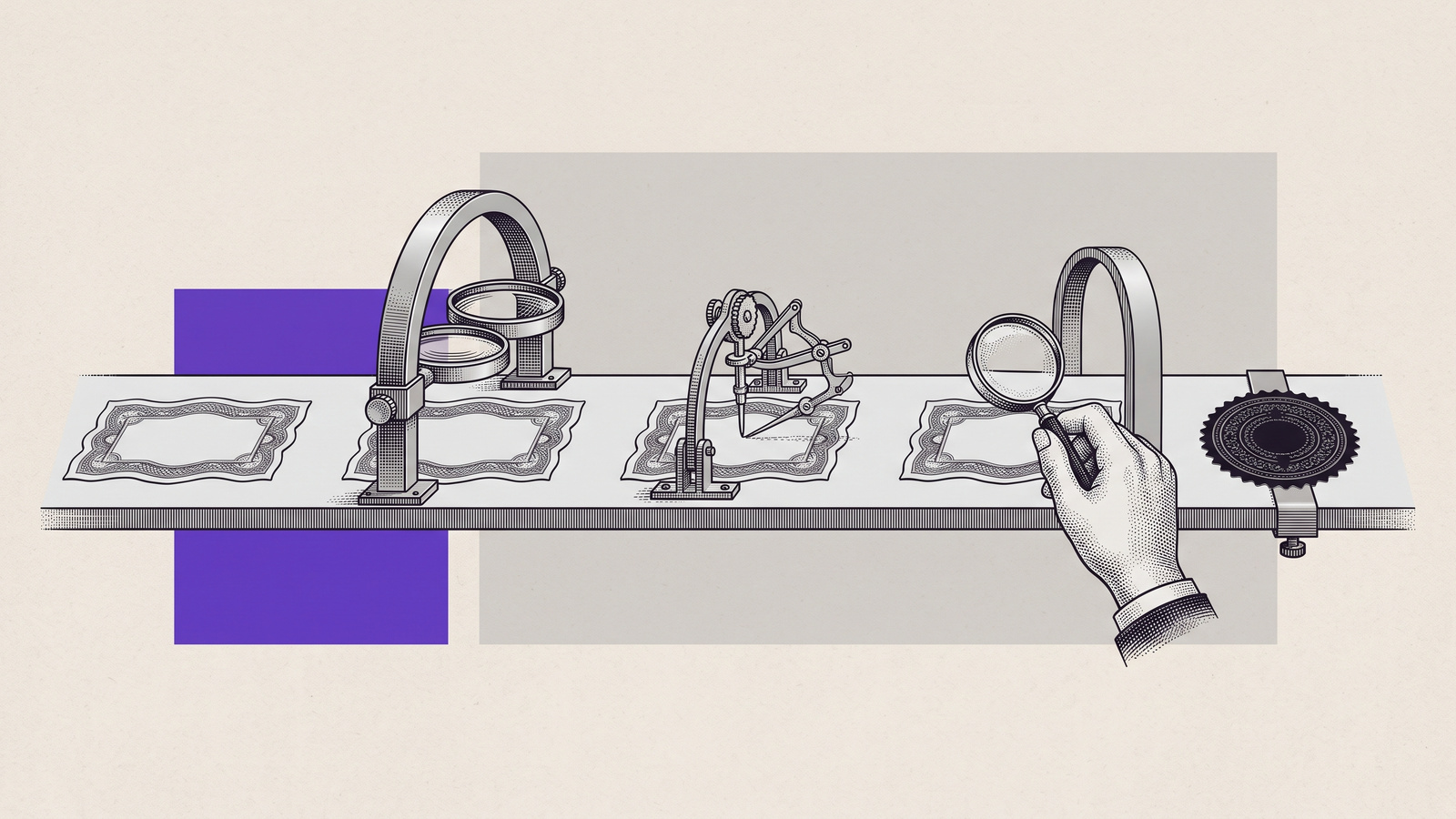
TL;DR: GitHub Agentic Autofix can investigate a CodeQL alert, draft a patch, rerun CodeQL, iterate, and open a pull request. That proves more than a one-shot suggestion, but less than a safe merge. Treat the result as three separate decisions: did the alert close, did the application still behave correctly, and did a named human review the security and business-logic risks the analyzer cannot prove?
GitHub made Agentic Autofix generally available on October 15, 2026. The feature explores relevant code, proposes a fix, runs CodeQL again, revises the patch when needed, and opens a draft pull request with reasoning and validation details.
That changes the review surface.
You are no longer judging only an AI suggestion pasted into a comment. You are judging a proposed code change with a machine validation loop attached. The useful question is not whether the agent “fixed the alert.” It is what each part of the workflow actually proved before you merge.
This is source-backed analysis, not an executed experiment.
What GitHub Agentic Autofix Actually Does
The general-availability release turns a code-scanning alert into an assignable remediation task. Agentic Autofix can inspect the codebase around the finding, make changes across relevant files, run CodeQL, refine the patch, and produce a draft pull request for human review.
GitHub’s current documentation is careful about the boundary. Autofix is a best-effort system. A generated fix still needs review and testing. Its validation is tied to supported CodeQL analysis, not every possible security control, product rule, or runtime behavior.
That gives reviewers a stronger starting point, not a delegated merge decision.
The draft pull request can answer questions such as:
Which alert was targeted?
Which files and code paths changed?
Did the relevant CodeQL finding remain after the patch?
What reasoning did the agent provide?
Did the agent revise the patch after validation, if the pull request records it?
It cannot, by itself, answer every question that matters to the application:
Did the browser workflow still work?
Did authorization behavior change?
Did the fix alter data access, state transitions, or error handling?
Did a different query, security rule, or unsupported tool still detect a problem?
Did the patch preserve the business behavior users depend on?
The Three-Layer Merge Gate
A useful review separates analyzer closure, application behavior, and human judgment. Collapsing them into one green check is how teams turn a well-validated local fix into a product regression.
Layer | Question | Minimum evidence | What it still does not prove |
|---|---|---|---|
CodeQL validation | Did the targeted finding close under the supported analysis? | Alert identity, query, before-and-after result, changed files, validation output | Full security coverage, correct business logic, safe runtime behavior |
Application regression | Does the affected workflow still behave correctly? | Targeted unit, integration, API, and browser checks for the changed path | That the security model is complete or the test set covers every misuse case |
Human security review | Is the patch acceptable in context? | Named reviewer, permission and data-flow review, residual-risk decision, merge approval | Future safety after unrelated code, configuration, or dependency changes |
All three layers can pass for different reasons. They can also fail independently.
A CodeQL alert may close while a checkout, account, or admin workflow breaks. Targeted tests may pass while the fix weakens a permission boundary the tests never modeled. A reviewer may understand the intended security change but miss an unsupported query or an external integration affected by the patch.
The point is not to distrust the agent. It is to preserve the meaning of each signal.
A Practical Review Walkthrough
Imagine Agentic Autofix receives a code-scanning alert for user-controlled input reaching a database query in an account-search endpoint.
The generated pull request replaces string construction with a parameterized query. CodeQL reruns and the alert closes.
That is meaningful evidence. The data flow identified by the supported query is no longer detected in the same form. But the merge gate should continue.
1. Confirm the Alert and Scope
Record the alert identifier, query name, repository path, affected branch, and files changed. Check whether the patch stayed inside the expected data path or modified adjacent validation, authorization, or error-handling code.
A small diff is not automatically safer. A broad diff is not automatically wrong. The reviewer needs to know why each changed file belongs to the fix.
2. Read the Generated Reasoning Against the Diff
Compare the pull request explanation with the actual code. Look for claims such as “input is now sanitized,” “the vulnerable sink is removed,” or “the query is parameterized.” Verify those statements directly.
Do not accept a polished explanation as a substitute for code review. The explanation is useful because it exposes the agent’s model of the problem. A mismatch between that model and the diff is a reason to stop.
3. Run Targeted Application Tests
Exercise the behavior around the changed endpoint:
valid searches still return the correct records;
empty, long, encoded, and unusual inputs produce the intended response;
unauthorized users cannot expand their access;
errors do not leak sensitive details;
rate limits, pagination, logging, and audit behavior still work;
the browser-facing flow still shows the correct success and failure states.
These tests are not extra ceremony. They examine product behavior outside the static-analysis claim.
4. Check Unsupported Coverage
GitHub documents limits around which findings Agentic Autofix can address and validate. Only alerts on the default branch can be assigned, and one pull request can cover up to 25 alerts. Confirm whether each alert came from the supported default CodeQL query suite or from a custom, extended, or third-party source. If the repository relies on additional analysis, run it separately.
Closing one finding is not proof that adjacent vulnerabilities disappeared. Third-party technical analysis of the release makes the same distinction: CodeQL-backed closure is valuable, but it should not be stretched into a claim about all security and business-logic risk.
5. Name the Human Decision Owner
The draft pull request should have a person accountable for the final merge decision. That person may be a security reviewer, a code owner, or an engineer responsible for the affected product surface.
“Agentic Autofix passed” is not an owner. “CodeQL is green” is not an owner. The system produced evidence. A person decides whether that evidence is sufficient for this change.
A Copyable Review Contract
Before merging an Agentic Autofix pull request, require the review to answer these questions:
Alerts: Which exact alert or alerts and query or queries does this patch address?
Scope: Which files, permissions, data flows, and user-visible behaviors changed?
Analyzer result: Did the targeted CodeQL finding close after the final patch?
Application checks: Which unit, integration, API, and browser regressions ran?
Negative cases: Which misuse, permission, malformed-input, and failure paths were checked?
Coverage gaps: Which custom queries, extended suites, third-party tools, or manual threat scenarios remain outside the validation?
Residual risk: What could still be wrong even if every recorded check passed?
Owner: Who reviewed the code and accepted the remaining risk?
If one of those answers is missing, the pull request may still be useful. It is not ready to be treated as a complete security decision.
What Changes as Security Fixes Become Agent-Generated
Security backlogs will increasingly arrive as agent-generated draft pull requests with machine validation attached, so reviewers will spend less time writing the first patch and more time evaluating the boundary of what the validation did and did not prove.
That shift changes what a trustworthy pull request needs to carry. A solving or reviewing agent will need the original alert, affected path, assumptions, changed permissions and data flows, analyzer result, targeted tests, unsupported coverage, expected behavior, actual behavior, and final human decision. A summary such as “CodeQL passed” is too compressed for the next reviewer, whether that reviewer is a person or another agent.
Require each generated security pull request to name the alert, affected path, CodeQL result, targeted tests, changed permissions or data flows, functional regression checks, unsupported query coverage, and human review owner before merge.
Add Browser Evidence Only Where the Fix Touches the Browser
Not every security fix needs a browser recording. A dependency-only patch, server-side parser change, or isolated library update may be better covered by code, API, and integration tests.
When the patch changes a browser-facing workflow, test the actual path rather than only the endpoint. A permitted tester can deliberately record the affected flow before and after the patch, inspect the transition, and compare the user-visible result with the server-side outcome. The team behind Samelogic built this workflow to help preserve deliberately recorded browser steps for review, not to replace CodeQL, source-code review, application tests, or security judgment. Teams evaluating that pattern can explore the browser bug reproduction workflow.
The practical standard is to keep the evidence separate. Agentic Autofix proposes the patch. CodeQL reports on the supported finding. Targeted tests examine the behavior they exercise. A named reviewer decides whether the remaining risk is acceptable.
Sources
Related workflows
Move from editorial context into the selector, Playwright, and bug-reproduction pages that turn exact UI evidence into action.
 Install the Chrome Extension