Browser Use Alternatives and How to Choose the Right Stack
Compare Browser Use alternatives by agent logic, browser infrastructure, deterministic control, extraction, and failure review.

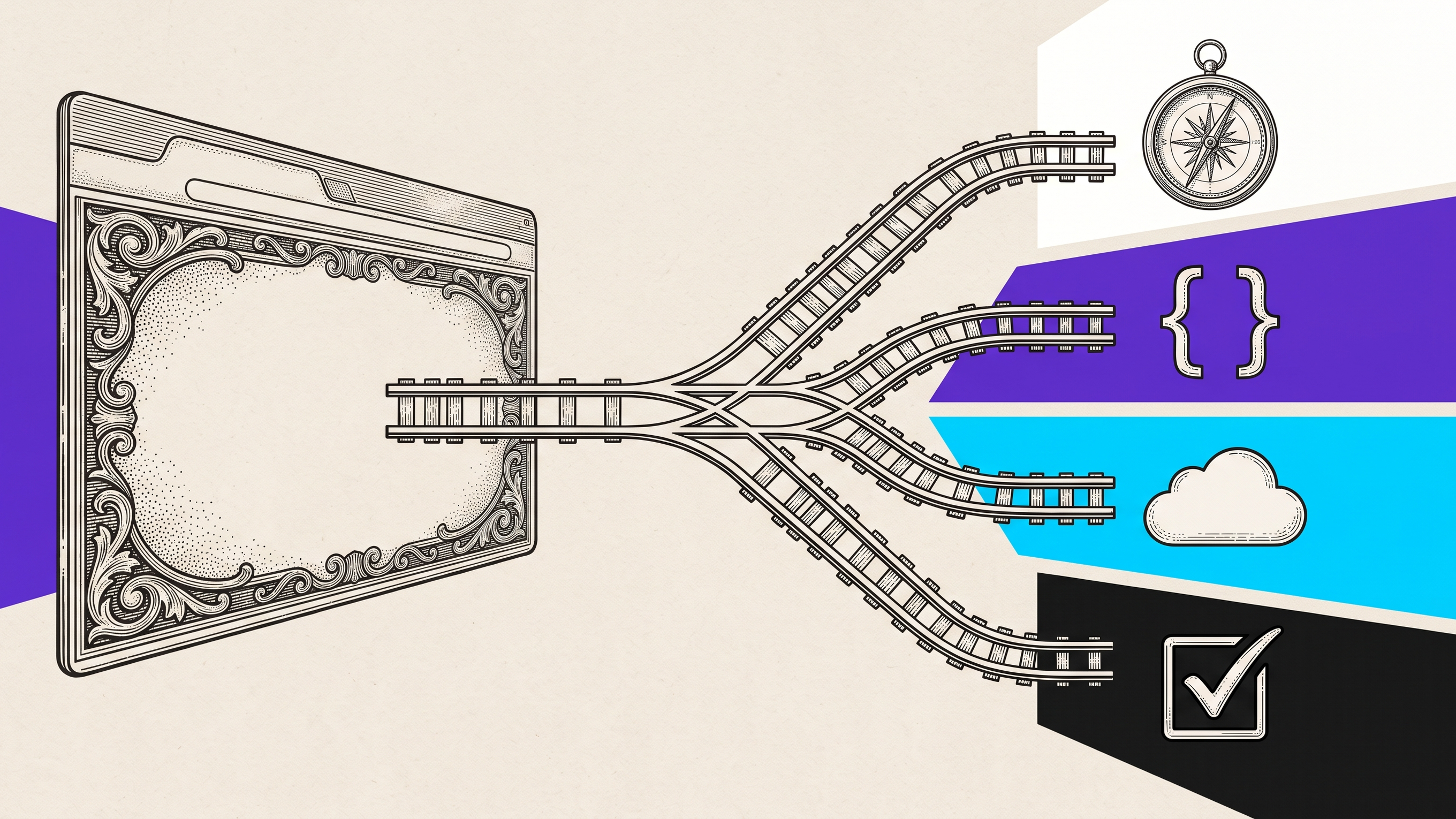
The best Browser Use alternative depends on which part of the stack you need to replace.
Choose Stagehand when engineers want to mix model-driven actions with deterministic browser code. Choose Skyvern when the work is a reusable, changing business workflow across web portals. Choose Browserbase when operating remote browser sessions is the problem and you already have task logic. Choose Playwright when the path is known and assertions, isolation, and cross-browser testing matter more than open-ended reasoning. Choose an extraction service when the goal is structured web data rather than completing a transaction.
Browser Use spans more than one layer. Its open-source library can run a browser agent, while its cloud offering can provide hosted agents and browsers. A useful comparison must separate the agent, browser runtime, workflow, evaluation, and human-review layers before comparing products.
This guide provides a job-first decision table, a worked support workflow, and a copyable scorecard for evaluating alternatives on your own pages.
Start with the layer you are replacing
A browser-agent stack usually contains five different jobs:
Task logic decides what to do next.
Browser control clicks, types, navigates, and reads page state.
Browser infrastructure runs sessions, profiles, proxies, recordings, and remote debugging.
Outcome verification checks whether the required result actually persisted.
Failure handoff gives a teammate enough context to inspect what went wrong.
Many comparison lists collapse those jobs into one category. That creates false alternatives. Browserbase can host the browser beneath an agent, but it does not decide the business workflow. Playwright can execute and assert a known path, but it is not an open-ended agent planner. An extraction API can return page data efficiently, but it may be the wrong tool for a task that must sign in, update a record, and verify the saved result.
The practical question is not “Which tool is most like Browser Use?” It is “Which layer is making this workflow unreliable, expensive, or hard to operate?”
Browser Use alternatives at a glance
Option | Best starting job | Control model | What your team still owns | Choose it when |
|---|---|---|---|---|
Browser Use | Goal-driven browser agents with local or hosted paths | Agent loop plus browser control | Task contract, safety policy, outcome checks, and review | You want a general browser agent and are comfortable evaluating the complete run |
Stagehand | Code-owned browser automation with AI at selected steps | Deterministic page APIs plus | Workflow code, approvals, retries, and outcome checks | Stable steps should stay explicit while ambiguous steps use a model |
Skyvern | Reusable workflows across changing portals | Visual workflows, SDKs, deterministic steps, and AI decisions | Business rules, test cases, credentials policy, and release gates | Operations teams repeat multi-step portal work that changes over time |
Browserbase | Managed remote browser sessions | Infrastructure controlled by your framework or agent | Agent logic, workflow logic, assertions, and business outcomes | Sessions, authentication state, proxies, recordings, or browser operations are the bottleneck |
Playwright | Known user paths, tests, and deterministic automation | Code, locators, assertions, and isolated contexts | Workflow code and maintenance | You can define the path and need reproducible checks across Chromium, Firefox, and WebKit |
Playwright MCP | Browser tools inside an existing MCP client | Structured browser operations exposed to an agent | Agent policy, task logic, outcome checks, and review | Your coding agent already speaks MCP and needs browser access rather than another agent framework |
Extraction service | Crawling and structured web data | Requests, browser actions, or extraction APIs | Downstream data validation and business process logic | The deliverable is data, not a state-changing browser outcome |
This is not a winner ranking. A team may use Stagehand with Browserbase, or Playwright for stable checks alongside an agent for variable cases. Compare operating layers before brands.
Choose Stagehand when AI should enter only selected steps
Stagehand’s current documentation describes two control layers. Its act, extract, and observe methods use model-driven instructions, while its page APIs provide deterministic browser control.
That split is useful when most of a workflow is known but one or two page states vary. For example, code can navigate to a support queue, select a known account, and assert the workspace. A model-driven step can then interpret a changing table or identify an action whose location moves between versions.
Stagehand is a strong Browser Use alternative when:
engineers want the workflow to remain application code;
AI should be limited to ambiguous page decisions;
structured extraction needs a schema;
the team wants to observe an action before executing it;
deterministic and model-driven steps must live in one workflow.
The tradeoff is ownership. Your team still defines the process, handles retries and approvals, and verifies the business result. A successful act call proves that an action was attempted. It does not automatically prove that the intended record persisted after a reload or fresh read.
Choose Skyvern when the browser task is an operations workflow
Skyvern combines code, visual workflows, and AI-assisted browser actions for multi-step web processes. That makes it more relevant when the recurring job is a business workflow rather than a single developer-controlled script.
A portal workflow might upload a document, wait for a review state, download a result, and route an exception. The page layout can change while the business process remains recognizable. In that setting, the team needs reusable workflow structure, parameters, run history, and a clear path for exceptions.
Skyvern is worth evaluating when:
the same process runs across third-party portals;
operations users need a visual or reusable workflow;
forms, downloads, and variable page states are central;
deterministic steps and AI decisions must work together;
the team needs SDK and workflow-builder paths.
The live search results for browser use alternative include Skyvern’s own alternatives guide. Treat vendor comparisons as useful product documentation, not neutral proof. Test the hardest pages yourself and score retries, wrong-target actions, completion, and review cost.
Choose Browserbase when running the browser is the hard part
Browserbase documents a browser session as an isolated cloud browser instance. Teams can configure region, viewport, session persistence, recording, logging, browser identity, proxies, extensions, and context persistence, then connect an automation framework through a session URL.
Browserbase is infrastructure, not the task planner. It is a Browser Use alternative only when the part you want to replace is the hosted browser layer.
Choose it when:
local browsers are difficult to operate at the required concurrency;
authenticated contexts must persist across approved runs;
engineers need live view, logs, recordings, or remote debugging;
region, proxy, browser identity, or session controls matter;
your existing Playwright, Stagehand, Puppeteer, or agent logic should stay.
Do not expect browser infrastructure to define success. If an agent submits a form in a Browserbase session, your application still needs to verify the right account changed, the update persisted, and no forbidden side effect occurred.
Choose Playwright when the path should be explicit
Playwright Test combines browser actions, assertions, isolated browser contexts, and support for Chromium, Firefox, and WebKit. It fits known user paths where the team can define the starting state and expected result in code.
Playwright is usually the better alternative when:
the steps are stable enough to express directly;
the required result can be asserted;
isolation and repeatability matter more than flexible planning;
the flow belongs in CI;
cross-browser checks are part of the requirement;
engineers need traces, screenshots, logs, and test reports.
A six-step account update does not need an open-ended agent merely because it happens in a browser. Start with deterministic control. Add a model only where variation defeats a reasonable coded contract.
Playwright’s limitation is also its strength. Engineers own the path. When the page’s meaning changes in ways the code did not anticipate, the test fails instead of asking a model to improvise. That is often correct for release gates and consequential actions.
If an existing coding agent already uses MCP, the Playwright MCP guide explains a different option. The MCP server supplies browser tools to that agent. It does not replace task policy or independent verification.
Use extraction services when the deliverable is data
Some Browser Use searches are really extraction problems. The user wants a clean product list, a set of article records, or structured fields from many pages. In those cases, a crawler or extraction API can be simpler and cheaper than a general browser agent.
Use an extraction-first tool when:
the output is data rather than a changed account or submitted transaction;
navigation can be bounded;
the site’s terms and your permission allow the collection;
structured schemas and throughput matter more than human-like interaction;
there is no need to preserve a long authenticated workflow.
Do not force extraction infrastructure into a transactional workflow. Sign-in, permission checks, multi-step form state, confirmations, and persistent outcome checks usually require a browser-control or workflow layer.
Work through a state-changing support workflow
Consider a support team using an approved fake-data workspace. The task is to reopen a synthetic customer ticket, change its region, save it, and confirm the new region persists after a reload. If the update fails, an engineer needs the exact browser path and the first mismatch.
Break the task into layers before selecting a tool:
Layer | Requirement | Useful choice |
|---|---|---|
Task logic | Find the ticket, check the account, change the region once | Playwright for a known path, Stagehand for a changing interface, or Skyvern for a reusable operations workflow |
Browser runtime | Use an approved authenticated session with bounded domains | Local browser for development or Browserbase when managed remote sessions are needed |
Outcome verification | Reload the ticket and read the stored region from an independent page state | Explicit Playwright assertion or a separate read-only check |
Safety | Do not alter any other ticket, send a message, or submit twice | Account precondition, one-submit rule, idempotency check, and stop conditions |
Failure review | Show the starting state, ordered actions, save response, reload result, and first mismatch | Trace, logs, screenshots, and a deliberately recorded browser path with sensitive values removed |
This example exposes a common mistake. A model may click Save, see a success banner, and report completion. The task has not passed until a reload or independent read shows the expected region on the intended ticket.
A general agent can execute the path. A deterministic test can execute the path. Hosted browser infrastructure can run either one. None of those choices removes the need for a durable outcome contract.
Copy this Browser Use alternative scorecard
Use the same task and environment for every candidate. Score facts, not demo polish.
Run the smallest consequential task that resembles your real work. A public benchmark or vendor success rate cannot tell you whether a tool handles your authentication boundary, portal variation, permission model, or receiving team.
A practitioner asking for alternatives in r/AI_Agents specifically framed the research around QA automation. That is a useful reminder that the word “alternative” hides different goals. A QA team may need assertions and traces. An operations team may need workflows and exceptions. A platform team may need browser infrastructure. An agent builder may need model-guided actions.
Decide with one sentence
Use this decision rule:
Choose Browser Use for a general browser agent with open-source and hosted paths.
Choose Stagehand for code-owned workflows with AI at selected steps.
Choose Skyvern for reusable business workflows across changing portals.
Choose Browserbase for managed browser infrastructure beneath logic you already own.
Choose Playwright for deterministic, assertable browser paths and testing.
Choose an extraction service when the required output is structured web data.
Then add the missing verification and review layers explicitly.
The team behind Samelogic built a workflow for deliberately recording browser bug steps and giving the teammate opening the recording more context about what happened. It can support a failed-run handoff after a permitted tester starts recording. It is not a Browser Use replacement, a browser cloud, passive session replay, or an independent check of provider-side outcomes.
The right Browser Use alternative is the tool that owns the layer causing your problem without pretending to solve the layers it does not. Define the task, prove the persisted result, and make the failure understandable to the person who has to fix it.
Related workflows
Move from editorial context into the selector, Playwright, and bug-reproduction pages that turn exact UI evidence into action.
 Install the Chrome Extension